





What Clinical Costing Means in Abu Dhabi
Clinical costing refers to the structured calculation of the actual cost incurred in delivering patient care. Unlike billing, which reflects charges submitted to payers, clinical costing focuses on:
-
Direct clinical costs (medications, diagnostics, physician time)
-
Indirect and overhead costs (administration, utilities, facility usage)
-
Department-level cost allocation
-
Patient-level cost visibility
In Abu Dhabi, this process must follow documented methodologies and structured frameworks that ensure traceability and consistency across healthcare providers.
Understanding the distinction between billing and costing is critical. Billing reflects revenue. Clinical costing reflects resource utilization and financial reality.
Regulatory Context: Governance and Cost Transparency
The Department of Health Abu Dhabi has progressively emphasized structured clinical costing frameworks as part of broader healthcare governance initiatives. These initiatives aim to strengthen transparency, standardization, and accountability across the sector.
Clinical costing expectations align with:
-
Defined cost center structures
-
Patient-level allocation logic
-
Documented cost drivers
-
Reconciliation with general ledger data
-
Submission-ready data formatting
Clinics should also understand how these expectations relate to broader clinical costing standards and compliance frameworks, which define how cost data must be structured, validated, and documented.
Core Components of Clinical Costing Compliance
To remain compliant, clinics must implement a structured framework that includes the following components:
1. Patient-Level Costing Framework
Costs must be traceable to individual patient encounters. This requires linking clinical activity — consultations, procedures, diagnostics — with financial allocation logic.
2. Defined Cost Centers and Cost Objects
Every service and department must be mapped within a structured cost center hierarchy. Clear cost objects (e.g., patient encounter, procedure) ensure consistency in allocation.
3. Allocation of Direct and Indirect Costs
Compliance requires allocating:
-
Direct costs directly to services
-
Indirect costs using documented allocation drivers
Overhead allocation must follow defined methodologies, such as step-down or activity-based costing principles.
4. Cost Drivers and Allocation Logic
Costing frameworks must clearly define allocation drivers, such as:
-
Time
-
Volume
-
Usage
-
Resource consumption
Undocumented or inconsistent allocation methods create compliance risk.
5. Financial Reconciliation
Clinical costing outputs must align with general ledger data. Reconciliation ensures that total allocated costs match recorded financial records.
6. Documentation and Audit Readiness
Every allocation rule, mapping logic, and adjustment must remain traceable and auditable.
Role of Malaffi and Interoperability
Abu Dhabi’s healthcare ecosystem includes structured data exchange through Malaffi, the Health Information Exchange platform. While clinical costing submissions are separate processes, structured data interoperability strengthens transparency and governance alignment.
Clinics must ensure that:
-
Clinical and financial data systems are integrated
-
Data exchange follows recognized standards such as HL7 and FHIR
-
Cost data remains consistent across systems
Structured interoperability reduces discrepancies and improves submission readiness.
Common Compliance Gaps in Clinics
Many clinics face challenges such as:
-
Manual spreadsheet-based cost allocation
-
Lack of defined cost drivers
-
Fragmented clinical and financial systems
-
Limited general ledger reconciliation
-
Inconsistent cost center mapping
-
Insufficient audit documentation
These gaps not only increase compliance risk but also limit operational visibility and financial clarity.
Why Structured Systems Are Becoming Essential
As compliance expectations strengthen, manual costing approaches become increasingly difficult to sustain. Clinics require structured platforms that:
-
Automate patient-level allocation
-
Maintain allocation consistency
-
Support XML-ready submission formats
-
Provide audit trails and documentation
-
Align with ADHICS data governance standards
If you are a clinic owner in Abu Dhabi you must consider implementing a structured clinical costing software in Abu Dhabi which enables clinics to replace fragmented processes with a scalable, compliant framework.
How QC Centra Supports Clinical Costing Compliance
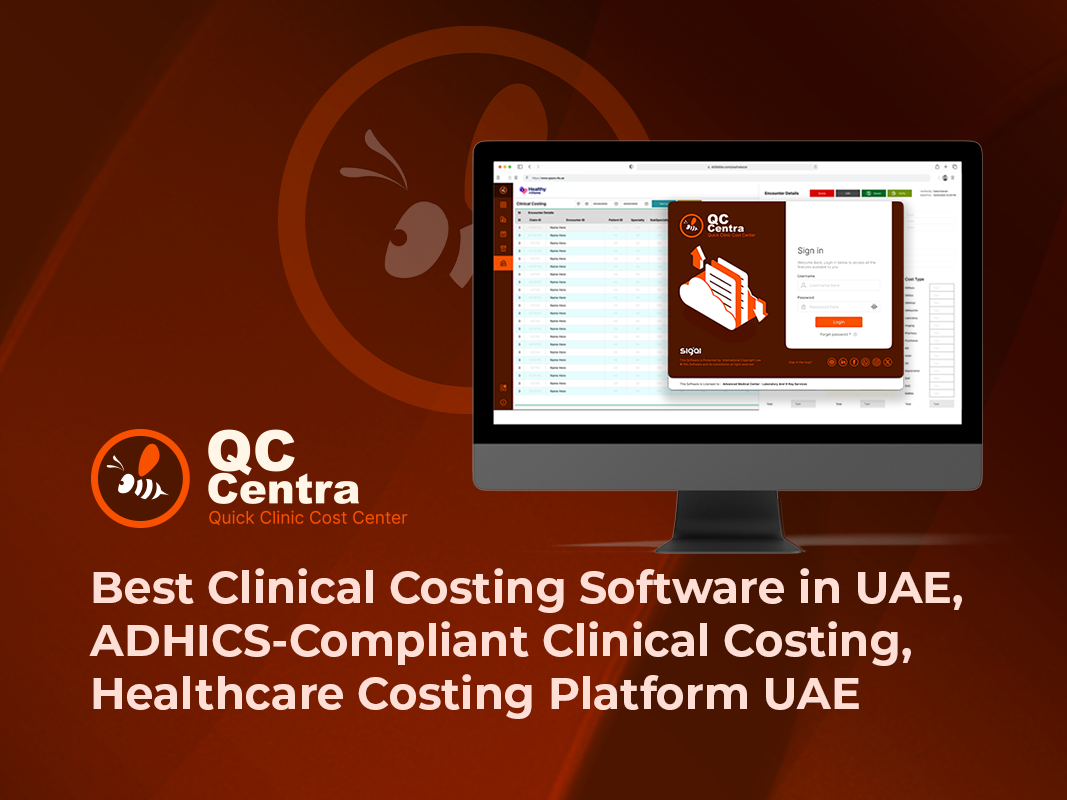
QC Centra is designed to support clinics in Abu Dhabi seeking structured, compliance-ready clinical costing frameworks.
It enables:
-
Patient-level clinical costing
-
Defined cost center and cost object mapping
-
Structured allocation of direct and indirect costs
-
Financial reconciliation with general ledger data
-
XML-ready reporting
-
EMR-integrated data flow
-
HL7/FHIR-based interoperability
-
ADHICS-aligned security governance
By transitioning from manual allocation methods to a structured clinical costing framework, clinics can strengthen transparency, reduce compliance risk, and improve operational insight.
Conclusion
Clinical costing compliance in Abu Dhabi is no longer a future consideration — it is an operational necessity. Clinics must adopt structured frameworks that ensure patient-level cost visibility, documented allocation methodologies, financial reconciliation, and secure data governance.
Organizations that proactively strengthen their costing systems will not only maintain regulatory alignment but also gain deeper insight into cost behavior, resource utilization, and long-term sustainability.
Structured clinical costing is not just about compliance — it is about building financial clarity and operational maturity in Abu Dhabi’s evolving healthcare landscape.