







Stellar School
Student Health Information System (SHIS)
View More


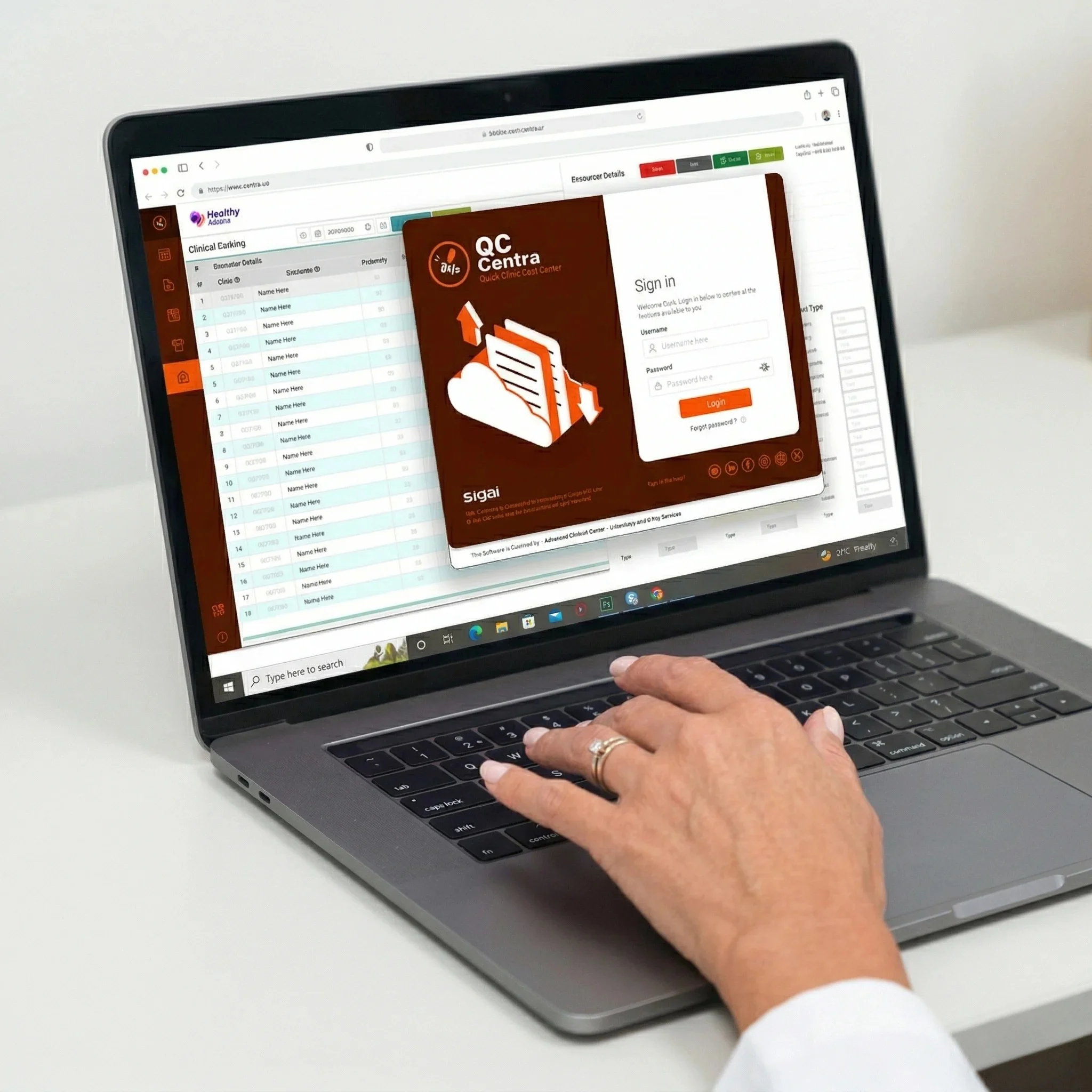
Patient-Level Clinical Costing Framework
Cost Allocation Across Departments and Services
Structured Reporting Aligned with DOH Requirements
XML-Ready Data for Clinical Costing Submission
Integrated Clinical and Financial Data View
Direct Mapping to Clinical Encounters and Orders
Multi-Department Cost Reconciliation
Service-Based and Procedure-Level Cost Analysis
Cost Performance Dashboards for Operational Insights
Historical Cost Comparison and Trend Monitoring
Compliance Support for Audit and Regulatory Reviews
Role-Based Access and Secure Financial Governance
Integration with HIS/ERP/EMR Systems.
Cost Visibility for Budgeting and Resource Planning
Scalable Framework for Growing Healthcare Providers

QC Centra is designed to help healthcare providers implement structured clinical costing aligned with UAE regulatory expectations and operational needs.
By transforming clinical data from your existing systems into patient-level cost insights, QC Centra enables accurate cost allocation, department-level visibility, and submission-ready reporting.
From tracking overheads to evaluating treatment costs and supporting audit readiness, every cost element is mapped to help clinics operate with financial clarity and compliance confidence.
QC Centra supports healthcare providers in moving from manual costing methods to a structured, scalable clinical costing framework built for the UAE healthcare ecosystem.

QC Centra connects clinical activities with financial data to enable accurate patient-level costing across departments and services.

Track treatment costs, service expenses, and departmental performance with real-time insights for better operational control.

Ensure compliance with DOH clinical costing standards through structured reporting, audit readiness, and submission alignment.

Integrates seamlessly with your existing HIS, ERP, and clinical systems — no full system replacement required.

Gain clear visibility into clinical costs with structured, patient-level tracking and audit-ready records.
QC Centra captures every cost allocation in real time and links it directly to clinical activity across systems — ensuring accuracy, traceability, and consistency.
Monitor cost behavior across departments, identify variations, and maintain reliable data for reporting, compliance, and financial planning.

Clinical costing is the process of identifying the actual cost incurred while delivering patient care by linking clinical services, resource utilization, and financial data. It goes beyond traditional billing by focusing on the operational effort and resources involved in care delivery, including manpower, diagnostics, procedures, and overheads.
By structuring cost data at the patient and service level, healthcare providers gain clarity into how costs are generated across departments and treatments. This enables a more accurate understanding of operational performance and financial efficiency.

Healthcare providers in the UAE are operating in an environment that increasingly emphasizes accountability, transparency, and structured reporting. Clinical costing supports this shift by enabling providers to maintain visibility into treatment costs, departmental performance, and operational efficiency.
It allows leadership teams to evaluate service-level costs, identify resource-intensive areas, and strengthen financial planning. Structured costing also supports governance and ensures consistency in how costs are measured and reviewed across the organization.
Clinical costing frameworks are evolving as part of broader healthcare governance. Providers are expected to maintain structured cost data, accurate allocation practices, and traceable records to support reporting and compliance with the Department of Health in Abu Dhabi.
This includes maintaining patient-level costing visibility, consistent cost documentation, and a structured approach to capturing operational expenses across services and departments.
Without a structured costing framework, healthcare providers often rely on manual spreadsheets, fragmented systems, and estimated allocation methods. This limits visibility into departmental performance and makes it difficult to maintain consistent reporting.
It also creates operational blind spots, where resource-heavy services remain unidentified and cost variations across departments go unnoticed.
Cost transparency enables providers to understand how resources are utilized across services, treatments, and departments. It strengthens financial governance, improves planning, and supports performance evaluation across clinical operations.
When cost visibility is structured, leadership teams can make more informed decisions regarding service expansion, resource allocation, and operational optimization.

QC Centra is backed by a strong track record of implementing clinical costing frameworks across multiple healthcare providers in Abu Dhabi and Dubai. Our team brings hands-on experience in aligning systems with DOH requirements, having supported clinics and centers through successful compliance cycles and audit processes. This practical expertise ensures a smoother transition to structured, patient-level costing with confidence in both accuracy and regulatory alignment.

QC Centra is a clinical costing platform designed to help healthcare providers implement structured patient-level costing, maintain consistent cost allocation, and support compliance with evolving regulatory expectations in the UAE.
QC Centra supports structured clinical costing frameworks aligned with regulatory direction in Abu Dhabi. It enables patient-level cost visibility, documented allocation methodologies, and reporting-ready data to help providers maintain compliance readiness.
Yes. QC Centra is designed to work with existing healthcare systems. It integrates with EMR and financial systems to retrieve and structure clinical and financial data without requiring system replacement.
QC Centra structures data from clinical systems, financial records, cost centers, and operational inputs to generate accurate cost allocation and reporting insights.
No. QC Centra works alongside existing systems and is designed to integrate into your current infrastructure without disrupting operational workflows.
QC Centra maintains structured documentation, traceable cost allocation logic, and audit trails. This helps healthcare providers prepare for internal reviews and regulatory reporting requirements.
Yes. QC Centra structures cost data in formats that support submission readiness, including XML-based reporting requirements where applicable.
1. System Assessment & Data Mapping
We evaluate your existing HIS, ERP, and EMR systems to map clinical and financial data into a structured costing framework.
2. Cost Center & Allocation Setup
Cost centers and allocation methodologies are configured to accurately distribute costs across departments and services.
3. Integration & Data Processing
QC Centra integrates with your existing systems to capture and process clinical and financial data without disrupting operations.
4. Patient-Level Costing Execution
Clinical activity is translated into patient-level cost data aligned with DOH clinical costing standards.
5. Validation & Reconciliation
All costing outputs are validated against financial records to ensure accuracy, consistency, and audit compliance.
6. Submission-Ready Data Outputs
Final data is structured in the required format for DOH submission, ensuring accuracy, completeness, and compliance with reporting standards.
From implementation to submission readiness, QC Centra provides a complete clinical costing workflow that supports compliance, accuracy, and operational visibility.