




What Are DOH Clinical Costing Requirements?
DOH clinical costing requirements are standardized guidelines introduced by the Department of Health (DOH) Abu Dhabi to ensure that healthcare providers accurately calculate, allocate, and report patient-level costs.
These requirements help hospitals and clinics improve financial transparency, operational efficiency, and regulatory compliance while supporting the transition to value-based healthcare in the UAE.
Why DOH Introduced Clinical Costing Requirements
The DOH clinical costing framework was introduced to standardize and improve healthcare financial management.
Key objectives include:
• Standardized cost reporting across providers
• Improved financial transparency
• Better resource utilization
• Support for value-based healthcare
• Data-driven policy and decision-making
This initiative positions Abu Dhabi as a leader in advanced healthcare cost management in the UAE.
Who Needs to Comply with DOH Clinical Costing Requirements
The DOH clinical costing requirements apply to all licensed healthcare entities in Abu Dhabi.
These include:
• Public and private hospitals
• Outpatient clinics
• Day surgery centers
• Rehabilitation facilities
• Specialized healthcare providers
• Health insurance payers
All organizations must implement a clinical costing system UAE to ensure compliance and accurate reporting.
Challenges Without Clinical Costing in UAE Healthcare
Without a structured clinical costing system UAE, healthcare providers face several challenges:
• Lack of visibility into patient-level costs
• Inefficient allocation of resources
• Revenue leakage and financial losses
• Difficulty in meeting DOH compliance requirements
• Limited insights for decision-making
These issues highlight the importance of implementing DOH clinical costing requirements in Abu Dhabi.
Benefits of DOH Clinical Costing for Healthcare Providers
Implementing DOH clinical costing requirements provides significant advantages:
• Improved cost transparency
• Better budgeting and financial planning
• Enhanced operational efficiency
• Data-driven healthcare decisions
• Regulatory compliance
• Support for value-based care models
A robust healthcare cost management UAE system improves both financial performance and patient outcomes.
How to Implement DOH Clinical Costing Requirements in Abu Dhabi
Implementing a clinical costing system in Abu Dhabi hospitals requires a structured and strategic approach.
Step 1: Data Assessment
Evaluate existing financial and clinical systems to identify gaps.
Step 2: System Integration
Integrate EHR, billing, and operational systems for accurate data flow.
Step 3: Define Costing Methodology
Adopt activity-based costing or reciprocal costing methods.
Step 4: Staff Training
Train teams on DOH clinical costing processes and compliance requirements.
Step 5: Reporting and Compliance
Generate reports aligned with DOH compliance healthcare standards.
Real-World Example: Clinical Costing in Abu Dhabi
A leading hospital in Abu Dhabi implemented a clinical costing system to align with DOH requirements.
Key outcomes:
• 20% improvement in cost efficiency
• Better resource utilization
• Accurate patient-level cost tracking
• Full compliance with DOH regulations
This demonstrates the real impact of adopting clinical costing systems in the UAE.
Clinical Costing Software in UAE Healthcare
Technology plays a critical role in meeting DOH clinical costing requirements.
Modern clinical costing software UAE offers:
• Automated cost allocation
• Real-time financial dashboards
• Integration with hospital systems
• Advanced analytics and reporting
Using a hospital costing software UAE, providers can streamline compliance and improve operational efficiency.
How QC Centra Supports DOH Clinical Costing Requirements
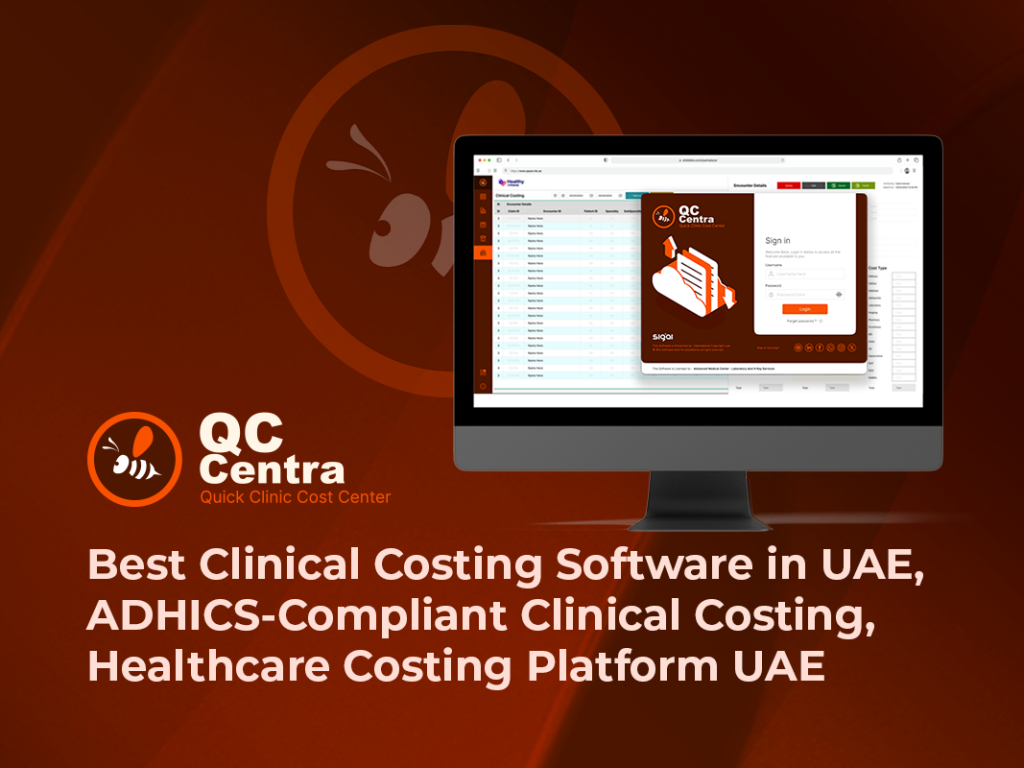
QC Centra is designed to help healthcare providers implement clinical costing systems in Abu Dhabi efficiently.
Key features include:
• Patient-level cost tracking
• Automated cost allocation
• ADCCDC-ready reporting
• Real-time analytics dashboards
• Full compliance with DOH clinical costing requirements
This enables faster implementation, improved accuracy, and better financial performance.
Compliance, Audit, and Regulatory Requirements
Healthcare providers must comply with strict DOH regulations.
Key requirements include:
• Regular audits and reviews
• Accurate financial documentation
• Data reconciliation with financial systems
Non-compliance may result in:
• Financial penalties
• Regulatory actions
• Operational risks
Key Challenges in Implementation
Healthcare providers may encounter:
• System integration complexity
• Data quality issues
• High implementation costs
• Organizational resistance to change
A strong clinical costing implementation UAE strategy is essential to overcome these challenges.
Future of Clinical Costing in the UAE
The future of clinical costing in Abu Dhabi is driven by digital transformation.
Emerging trends include:
• AI-driven cost analysis
• Predictive healthcare analytics
• Real-time dashboards
• Integration with national healthcare systems
Conclusion
The DOH clinical costing requirements in Abu Dhabi are essential for improving transparency, efficiency, and compliance in healthcare.
By implementing a modern clinical costing system UAE, healthcare providers can optimize costs, improve decision-making, and align with value-based healthcare models.
Looking to implement DOH clinical costing requirements?
QC Centra helps healthcare providers achieve compliance faster and improve financial performance.
FAQ
What are DOH clinical costing requirements?
They are regulations that define how healthcare providers calculate and report patient-level costs.
Who must comply with DOH clinical costing?
All DOH-licensed healthcare providers in Abu Dhabi.
What is the best costing method?
Activity-based costing is the most accurate and recommended.
What is clinical costing software UAE?
It is a system used to manage and analyze healthcare costs efficiently.