




With the upcoming clinical costing submission cycle approaching in 2026, healthcare providers across the UAE are entering a critical preparation phase. As deadlines draw closer, the focus is shifting toward ensuring data accuracy, proper structuring, and full alignment with DOH requirements.
Unlike the previous cycle, expectations around consistency and validation are becoming more defined, leaving less room for errors or last-minute adjustments. Healthcare facilities are now expected to demonstrate a clearer understanding of their cost structures, supported by well-organized and reliable data.
For many providers, this period is not just about meeting submission timelines — it’s about putting the right processes in place early to avoid delays, rework, and compliance risks as the deadline approaches.
Clinical Costing 2026 Timeline Confirmed
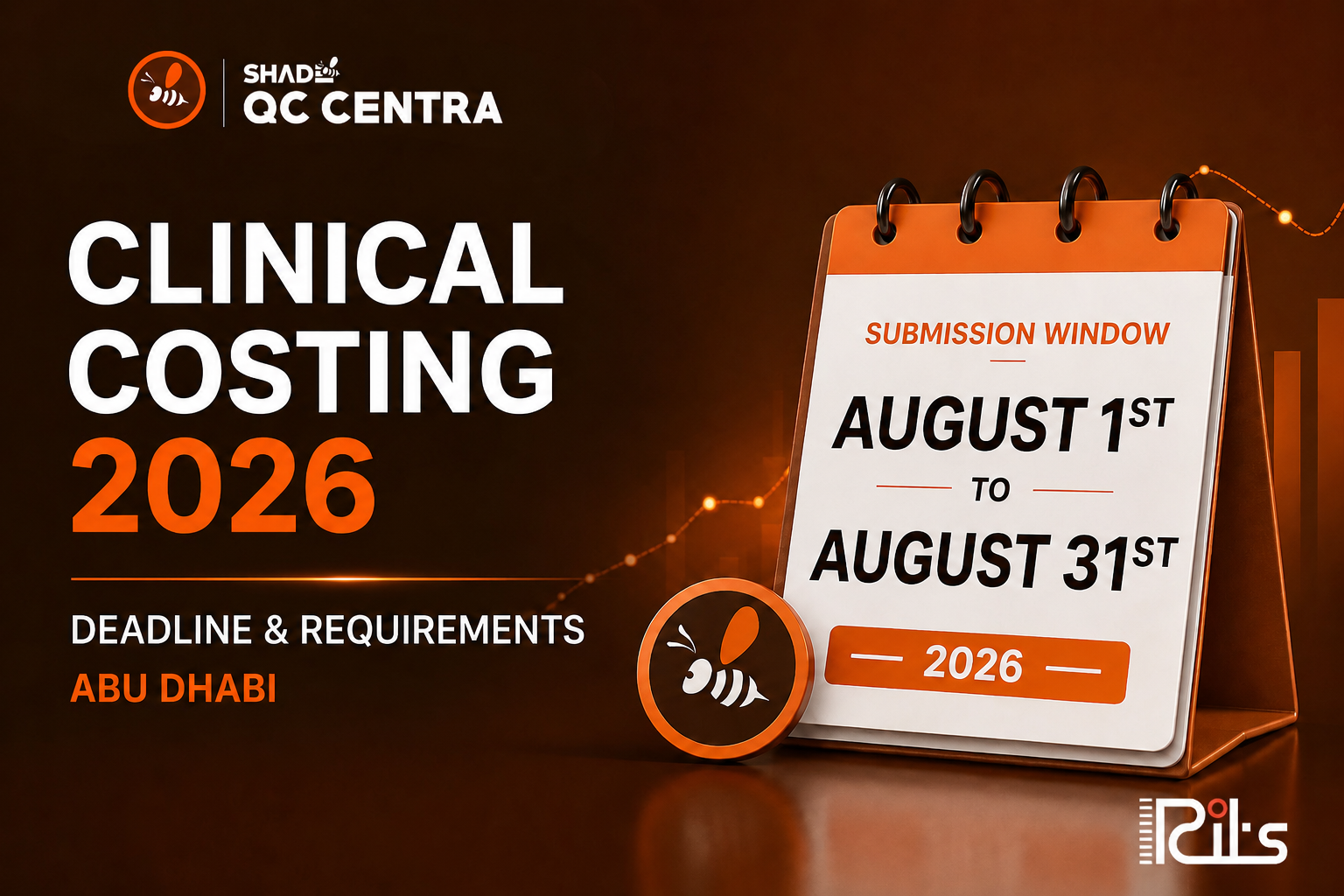
The official submission window for the 2026 cycle has been confirmed:
- Submission Window: August 1st to August 31st,, 2026
- Preparation Phase: Must be completed before August
- Validation & Review: Conducted after submission
Key Takeaways from DOH Clinical Costing 2026
- Greater emphasis on structured and validated data
- Increased focus on accurate cost allocation
- Early preparation is critical for smooth submission
- System-driven approaches reduce errors and delays
- Consistency across departments is now expected
Understanding the Shift in 2026
The 2026 cycle reflects a more structured and refined approach to clinical costing.
There is a stronger emphasis on:
- Standardized data structures
- Accurate cost allocation across departments
- Proper service-to-cost mapping
- Pre-submission validation and consistency
Healthcare providers are expected to move beyond basic preparation and adopt a more systematic approach to meet these expectations.
Where Most Healthcare Providers Struggle
Despite increased awareness, many providers still face practical challenges when preparing for clinical costing submissions.
Common issues include:
- Fragmented and unstructured data
- Inconsistent allocation methods
- Limited visibility into treatment-level costs
- Manual processes leading to errors and delays
These challenges often result in last-minute pressure and uncertainty as deadlines approach.
What to Expect in the 2026 Submission Cycle
While exact timelines may vary, the 2026 cycle typically follows a structured progression:
- Initial phase: Data collection and structuring
- Mid phase: Validation and correction
- Final phase: Submission readiness and compliance checks
As the deadline approaches, delays in preparation can significantly increase the risk of errors, rework, and submission issues.
Preparing for the 2026 Clinical Costing Cycle
To stay ahead of deadlines, healthcare providers should focus on:
- Structuring operational and financial data early
- Ensuring alignment between services and cost centers
- Validating costing outputs before submission
- Reducing reliance on manual processes
Early preparation plays a key role in avoiding last-minute complications.
Simplifying Clinical Costing with the Right Approach
Handling clinical costing manually or through fragmented systems often leads to inconsistencies, inefficiencies, and increased risk of errors. A structured approach supported by the right tools can significantly improve accuracy and simplify the overall process.
At RITS, we have developed a dedicated clinical costing software designed specifically for healthcare providers in the UAE. From cost allocation to end-to-end submission, QC Centra helps streamline the entire clinical costing process with greater clarity and control.
If you need assistance with clinical costing, feel free to get in touch with us.
Frequently Asked Questions
1. Is clinical costing mandatory in the UAE?
Yes, clinical costing is a key requirement under DOH initiatives, and healthcare providers are expected to submit accurate and structured data.
2. What is the biggest challenge in clinical costing?
Most providers struggle with unstructured data, inconsistent cost allocation, and lack of a standardized framework.
3. What happens if clinical costing data is inaccurate?
Inaccurate data can lead to delays, rework, and compliance risks during submission.
4. When should providers start preparing for the 2026 cycle?
Preparation should begin well before the submission window to allow sufficient time for structuring and validation.
5. How can healthcare providers simplify clinical costing?
Adopting a structured system such as QC Centra helps streamline the process, reduce errors, and improve overall efficiency.